Back
Buying a used electric car: The riskier second-hand choice is the internal combustion engine
Is buying a used EV a good idea? The 5 checks before you buy, what the battery data really says and the one exception.
5th November 2026
Buying a used electric car makes sense because a second-hand EV is the safer option. The risk lies in a used combustion engine vehicle. An EV has hardly any parts that can break down. And the battery, which everyone worries about, actually lasts significantly longer in reality than its reputation suggests. What you need to check before buying fits on a coaster.
I know what I'm talking about. I've owned nine petrol cars, several bought second-hand. I know the routine: flipping through the service booklet, looking under the car, listening for every noise during the test drive. Since 2021, I've been driving electric, now on my fourth EV. Two bought new, two second-hand—an Audi and a Tesla. My conclusion: I would buy any used EV without hesitation.
Why is a used EV the safer second-hand choice?
A used EV is the safer second-hand choice because almost everything that typically causes worry in a used car is simply absent in an EV. There's a reason why trams, trains, and trolleybuses have been running on electricity for decades. Electric motors are durable, require little maintenance, and are straightforward.
A combustion engine car has thousands of moving parts that wear out and regularly break. An EV has an electric motor. Battery anxiety? A used combustion vehicle has a thousand more reasons to leave you stranded. No oil changes. No timing belt. No slipping clutch. No jerky gearbox. No rusting exhaust. No spark plugs, no turbocharger, no starter motor.
This counts double when buying second-hand. With a used combustion car, you always buy the wear and tear left behind by the previous owner. With an EV, that wear barely exists. Did someone forget to change the timing belt? That doesn't exist in an EV.
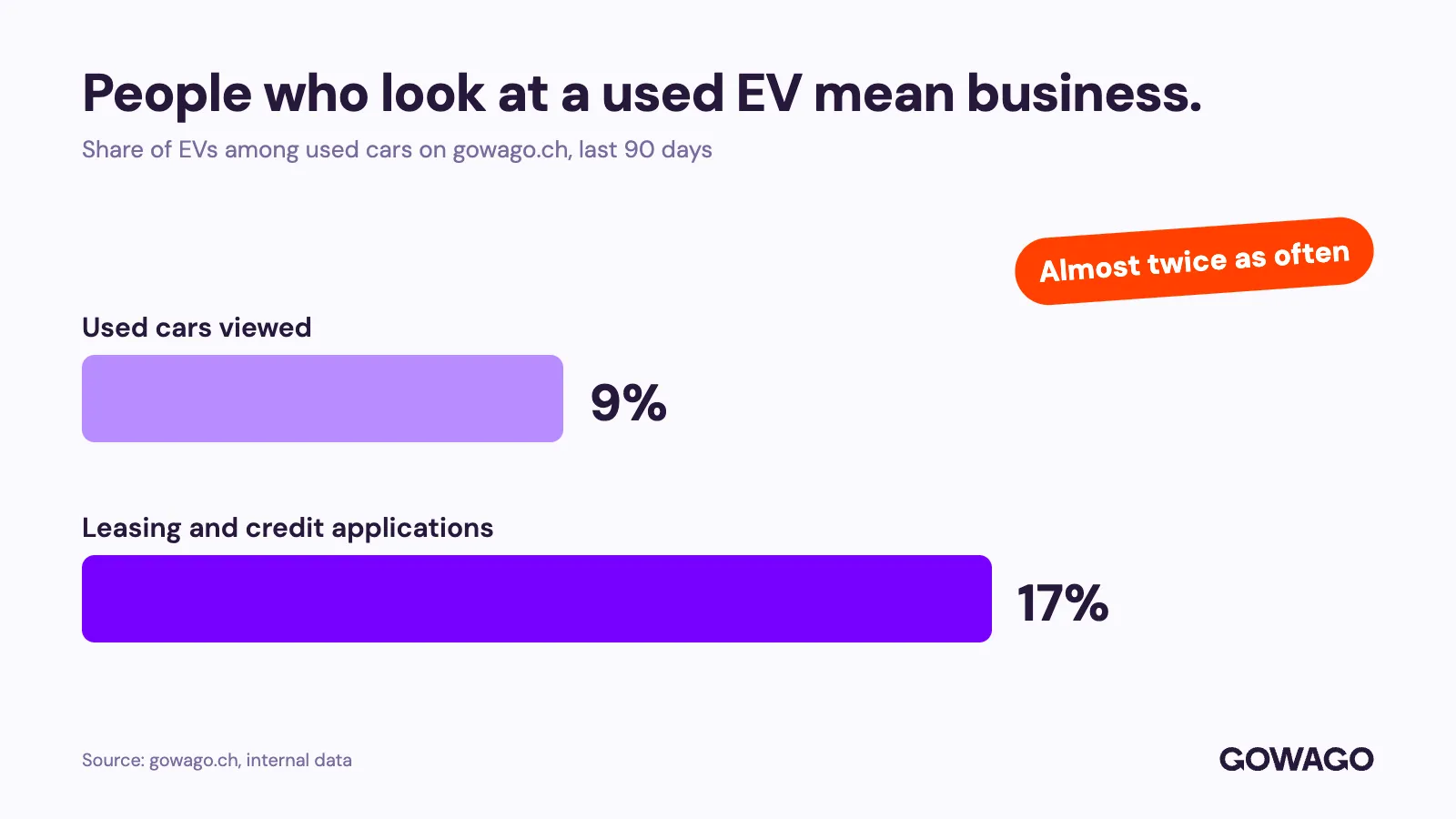
We see this at Gowago too. Over the last 90 days, EVs made up around 9% of the second-hand listings people looked at on gowago.ch. However, when it came to leasing and credit applications for second-hand cars, their share jumped to 17%. Those looking at a used EV are almost twice as likely to follow through.
How good is the battery after 100,000 kilometres?
The battery is usually still in very good condition after 100,000 kilometres: according to Aviloo, 16 of the 20 most popular models still retain at least 90% capacity even after 150,000 km. The story about the battery failing after a few years is nonsense. In the past, we only had assumptions; today, we have data.
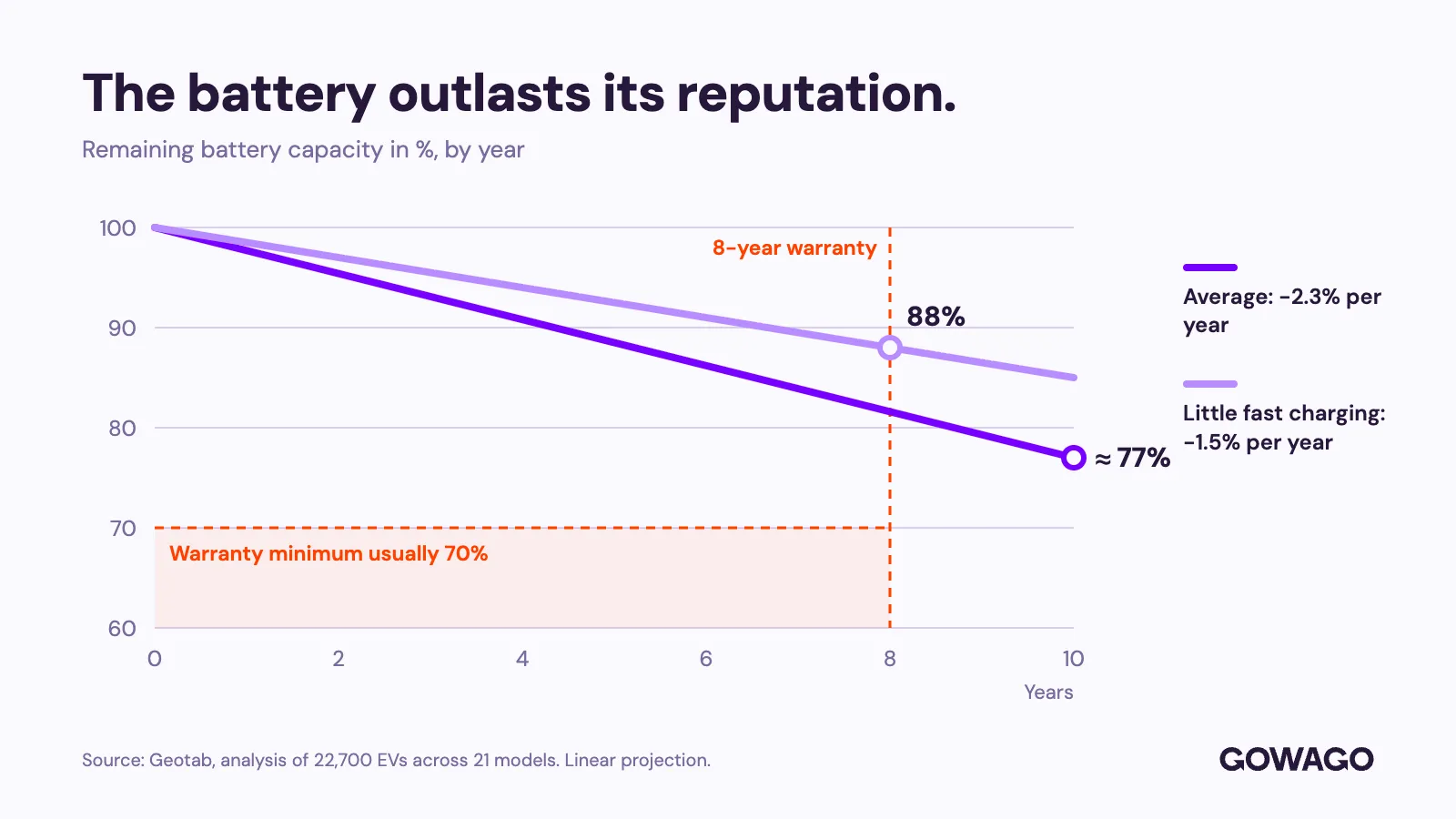
Telematics provider Geotab evaluated over 22,700 EVs across 21 models. On average, batteries lose 2.3% of their capacity per year. Those who rarely fast-charge even see a degradation rate of only 1.5% per year. After eight years, around 88% capacity remains.
Battery testing specialist Aviloo reached the same conclusion after over 500,000 second-hand car tests. 16 out of the 20 most popular models still have a median capacity of at least 90% after 150,000 km, while the remaining four hover between 85% and 90%. According to Electrek, early data for Model 3 and Model Y shows less than 10% loss after 160,000 km. In short: in most cases, the battery lasts longer than the rest of the car.
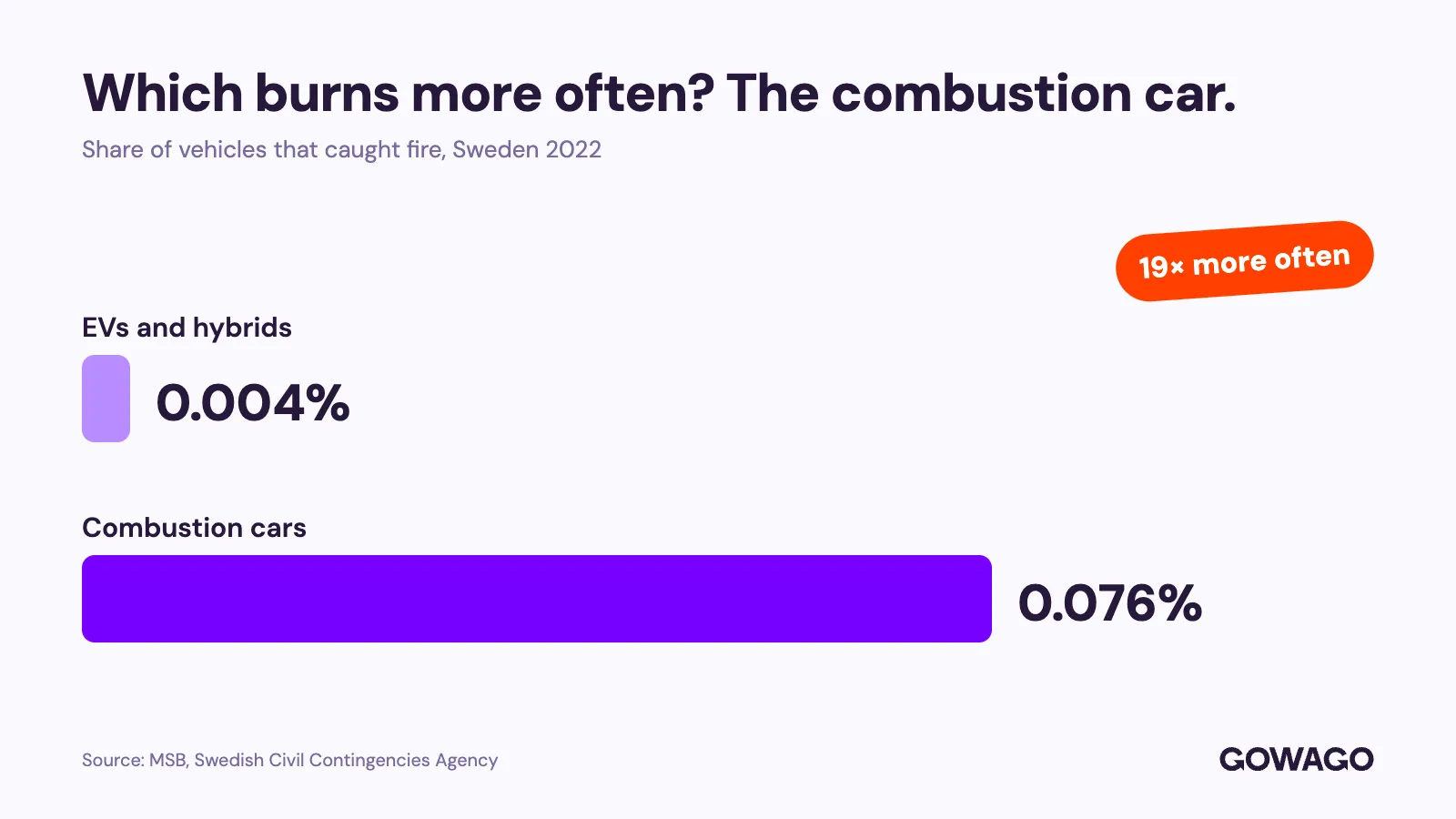
Here's a second myth busted: EVs don't catch fire more often—they burn much less frequently. In Sweden, the Civil Protection and Contingencies Agency (MSB) recorded data for 2022. Out of around 611,000 EVs and hybrids, 23 caught fire, which represents 0.004%. For combustion engine vehicles, the rate was 0.076%, which is about 19 times higher.
You can read more about what happens to old batteries in our article What happens to electric car batteries?.
What to look out for when buying a used EV?
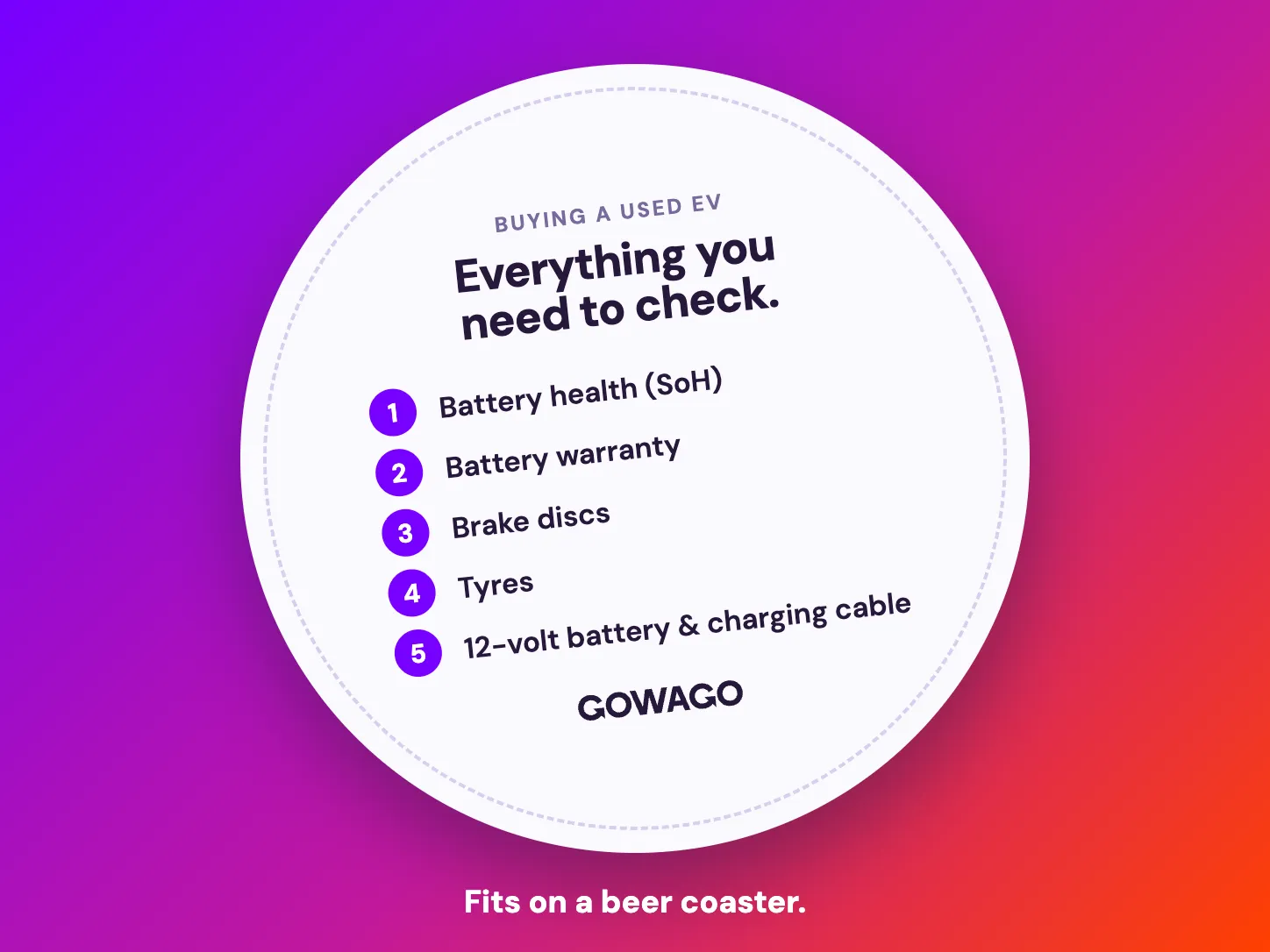
When buying a used EV, exactly five points matter. You can skip the rest.
1. Battery State of Health (SoH)
The SoH shows how much capacity the battery retains compared to when it was new. In many models, it can be checked directly in the vehicle, such as in a Tesla. Alternatively, an independent test can be done via the TCS battery test in Zurich (Volketswil or Schlieren): it takes about 20 minutes and costs CHF 75 for members (CHF 115 for non-members). This is worthwhile because, according to Aviloo, battery health varies widely even within the same model—by more than 12 percentage points in the Hyundai Ioniq 5. Make sure to check the individual vehicle, not just the general model stats.
2. Battery Warranty
Most manufacturers guarantee 8 years, often up to 160,000 km, and typically a minimum of 70% capacity. This warranty transfers to the next owner. Check how many years and kilometres are remaining. A three-year-old EV often still has five years of battery warranty left—something almost no second-hand petrol or diesel car can offer.
3. Brakes
Brakes on EVs suffer very little wear because regenerative braking handles most of the deceleration. However, the catch is that brake discs can rust due to lack of use. According to the German TÜV association, brake disc defects are typical for EVs. Brakes are also inspected during the MFK in Switzerland. Take a look at the brake discs before signing.
4. Tyres
EVs are heavier and deliver instant torque. Because of this, tyres wear down faster than on comparable combustion cars. A quick check of the tread depth is enough.
5. 12-Volt Battery and Charging Cable
EVs also feature a small 12-volt auxiliary battery, which happens to be a common cause of breakdowns. Ask when it was last replaced. Also, check whether the Type 2 charging cable is included. We explain the best charging practices in our Guide to Charging Electric Cars.
That's all. No checking oil levels, no timing belt intervals, no clutch test.
And if you want zero risk: Certified Pre-Owned. At Gowago, that means thoroughly inspected, fully documented, equipped with a battery certificate, and backed by at least 12 months of warranty. For Tesla models, it's at least 3 years on the battery and drivetrain.
What speaks against buying a used electric car?
Hardly anything speaks against buying a used EV, with one real exception: older models without active battery cooling. The most prominent example is the early Nissan Leaf, whose battery is cooled only passively by ambient air. Heat and frequent rapid charging take a significantly higher toll on its longevity. Geotab data shows that high heat accelerates battery ageing even in modern cars; without active cooling, this effect is amplified.
This doesn't mean such a car is bad. For short city trips, it can be perfectly fine. For a Friday evening drive to Lenzerheide, probably not. Here, an independent battery test is mandatory, and the range must suit your daily routine.
For nearly all EVs offered as second-hand vehicles today, this is no longer an issue. Tesla, Audi, VW, Hyundai, Kia, BMW, and others actively cool their batteries. To see which models are worth considering, check our list of the best used electric cars in Switzerland.
Why do used electric cars lose value so quickly?
Used electric cars lose value quickly because technology evolves rapidly and new car prices have dropped. Tesla cut prices several times in recent years, and competitors followed suit. New models enter the market with greater range, placing downward pressure on older model prices.
For you, this isn't a drawback—it's an advantage. The steepest depreciation occurs in the first few years, and the previous owner has already absorbed that cost. You get a car with a healthy battery and remaining warranty at a fraction of the original new price.
If you choose to lease, depreciation isn't your concern anyway. The residual value is fixed in the lease agreement. At the end of the term, you return the vehicle, and its market value at that point doesn't affect you. You pay a fixed monthly rate and nothing more. We explain how vehicle returns work in our article on leasing returns. You can find more on this topic in our tips on electric car leasing.
Frequently Asked Questions
How many kilometres should a used electric car have?
Kilometres are less critical on a used EV than on a combustion car. The decisive factor is the battery condition. An EV with 150,000 km and a 90% SoH is a better choice than one with 60,000 km and an 84% SoH. Get the condition tested before deciding.
Is it better to buy a used or a new electric car?
For most people, a used EV is the better choice. Having bought both new and second-hand twice, my experience shows that buying new gives you the latest tech and full warranty. Buying used gives you significantly more car for your money, with the heaviest depreciation already absorbed. Given a healthy battery, I would choose second-hand again.
What is an electric car worth after 10 years?
After 10 years, an EV battery retains roughly three-quarters of its original capacity on average, based on the 2.3% annual degradation rate from the Geotab study. The car's overall value depends on the model, mileage, and market conditions, so there's no single fixed figure. The vehicle will continue to drive for many years, just with slightly reduced range.
Do used electric cars catch fire more often than combustion cars?
No, used EVs do not catch fire more often than combustion vehicles. According to data from the Swedish Civil Protection and Contingencies Agency (MSB), petrol and diesel cars catch fire approximately 19 times more frequently than EVs.
How long does an electric car battery last?
An EV battery generally outlasts the rest of the vehicle. According to Geotab, it loses an average of 2.3% capacity per year, and most manufacturers guarantee 8 years or 160,000 km with at least 70% capacity remaining.
What breaks down most often in an EV?
Three main components typically require attention in an EV, none of which are the drivetrain: brake discs can rust due to light use, tyres wear faster due to vehicle weight, and the 12-volt battery remains a common source of breakdown calls.
Conclusion: Is a used EV worth it?
A used electric car is a sensible choice for most buyers: it has fewer wearing parts than a combustion car, and the battery usually outlasts the rest of the vehicle. Check the five main points before buying—especially the battery condition—and avoid older models lacking active battery cooling.
You can find second-hand EVs on gowago.ch with fixed monthly rates, available via leasing or auto credit, all online. Take a look. Let's go.
About the Author
Simon Smit is CXO at Gowago. He drives extensively, has owned nine petrol cars, and has been driving electric since 2021—now on his fourth EV: two new, two second-hand, Audi and Tesla.
Sources
- Geotab, EV Battery Health (22,700 vehicles, 2.3% per year)
- Aviloo Battery Report via electrive.net (500,000 tests, 16 of 20 models at least 90% at 150,000 km)
- Electrek, Tesla vehicle data (Model 3/Y under 10% after 100,000 miles)
- MSB, Bränder i elfordon 2018–2024 (2022: 23 fires among 610,716 EVs and hybrids)
- MSB Sweden 2022 via teslamag.de (0.004% vs. 0.076%)
- TCS EV battery test (22 min., CHF 75/115)
- TÜV association on brake discs in EVs via ADAC